A winter check-up isn’t a mandatory ritual for every car, and it shouldn’t be a reason to replace parts that are still doing their job. But before temperatures drop, a focused inspection can reveal weaknesses that may otherwise show up at the least convenient time, often when you need the car to start, stop and clear the windshield reliably.
The honest answer for drivers in Pawling, NY: if your maintenance is current and the major systems are in good shape, you may need only a few checks. If you’re unsure about your battery, tires, brakes or cooling system, a pre-winter inspection is a sensible way to find out before the first hard freeze.
Why cold weather exposes weak parts
Cold weather doesn’t usually create a problem out of nowhere. More often, it makes an existing weakness harder to ignore. A battery that has lost capacity may still start the car on a mild day, then struggle when temperatures fall. Tires with low pressure or limited tread offer less margin when the pavement is cold or slick. Old wiper blades can smear instead of clearing winter grime.
That’s why timing matters. An inspection gives you a chance to address safety concerns and likely breakdown risks before you depend on those systems through the season. It also helps separate urgent repairs from maintenance that can stay on your regular schedule.
What a useful winter check-up should cover
A good inspection is tailored to the vehicle’s condition and manufacturer’s maintenance schedule, not a one-size-fits-all package. At Mike’s Automotive, our maintenance and auto repair services include multi-point inspections, fluid checks, tire services, diagnostics and brake work.
Battery and charging system
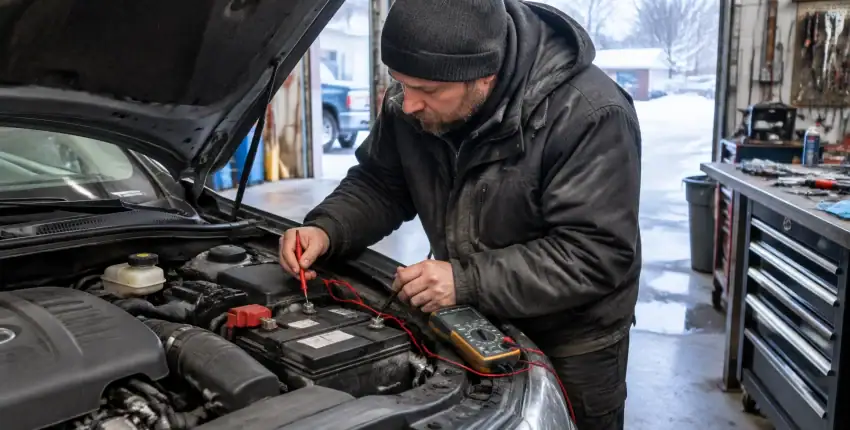
A battery test can show whether the battery is holding a healthy charge and whether the charging system is operating properly. A visual check should also look for loose or corroded connections. If the engine cranks slowly, the battery is several years old, or you’ve needed a jump-start, don’t rely on guesswork.
A test result doesn’t automatically mean you need a replacement. It helps you make a decision based on the battery’s condition, rather than waiting to find out when the car won’t start.
Coolant condition and freeze protection
Coolant does more than help control engine temperature. It also needs to be in suitable condition and provide the freeze protection specified for your vehicle. A technician can check the coolant and look for signs of leaks or deterioration.
Never open a hot cooling system. If you’re checking the reservoir yourself, wait until the engine is fully cool and follow the owner’s manual. A low level, recurring warning or visible leak deserves attention; simply topping it off without finding the cause may not solve the problem.
Tire tread, condition and pressure
Tires are central to steering, traction and stopping, so they deserve priority before winter. Check tread depth and look for uneven wear, cracks, bulges or other damage. If the tread is getting shallow, wet or snowy conditions can leave you with less grip when you need it.
Check tire pressure when the tires are cold and use the pressure listed on the driver-door label or in the owner’s manual, not the maximum printed on the tire sidewall. Pressure can fall as temperatures drop, so it’s worth checking periodically. For more guidance, see our practical tire care tips.
Brakes and stopping performance
Brakes matter in every season, but reduced traction makes it especially important to know they’re working properly. An inspection can identify worn pads, rotor concerns or other issues before they turn into a safety problem.
Pay attention to changes such as squealing, grinding, pulling to one side, a pulsing pedal or a pedal that feels unusually soft. These are reasons to arrange an assessment promptly, not to wait for a convenient time later in winter. If service is needed, brake repair and service should be based on the condition of the system.

Wipers, washer fluid and visibility
Good visibility is a safety issue, not a cosmetic detail. Replace blades that streak, skip or leave broad areas uncleared, and make sure the washer system works. Use washer fluid rated for low temperatures; ordinary water can freeze, and engine coolant must never be used in the washer reservoir.
Check that headlights, brake lights, turn signals and hazard lights work. Test the front and rear defrosters as well. If a defroster can’t clear the glass effectively, it’s worth having the system checked before you’re driving in cold, damp conditions.
Belts and hoses
Belts and hoses wear with age and heat cycles. A technician can look for visible cracking, fraying, swelling, soft spots, leaks or loose connections. This is a straightforward part of a pre-winter inspection, particularly if you’ve noticed a new squeal, a coolant smell or signs of fluid under the vehicle.
Heater and defroster
Make sure the cabin heater produces warm air and the defrosters clear the glass. Weak heat or a defroster that struggles could be a comfort issue, or a visibility concern that needs attention. If a dashboard warning light is on, the car is hard to start, or you’re noticing a change in performance, a car diagnostic test can help identify the cause rather than relying on a guess.
What should you deal with first?
If everything can’t be addressed at once, prioritize problems that affect safe operation or could leave you stranded. That usually means tires with insufficient tread or damage, brake symptoms, a weak battery, coolant leaks, faulty lights or a defroster that can’t maintain visibility.
Other work may be able to wait. A maintenance item that isn’t due according to your vehicle’s schedule doesn’t necessarily need to be done just because winter is approaching. Cosmetic concerns and nonessential features generally rank below safety and reliability. Ask what the inspection found, what could happen if you delay, and when the item should be revisited.
That kind of conversation matters. A winter check-up should give you a clear picture of your car’s condition, not a list of automatic replacements. Mike’s Automotive has served Pawling since 2019, bringing dealership-level experience and a neighborhood shop’s personal attention to drivers in Pawling and the surrounding communities.
So, do you really need one?
If your car has been maintained on schedule, starts reliably, stops smoothly, has sound tires and no warning signs, you may not need extensive work. But a quick inspection can confirm what’s in good shape and catch a developing issue before the weather puts extra demands on the vehicle.
If it’s been a while since anyone checked the battery, tires, brakes or fluids, or if you’ve noticed a change, booking a winter check-up is a practical step. For more on what a thorough inspection can include, read our vehicle safety inspection guide.
Bottom line: a winter check-up isn’t about fixing everything; it’s about knowing what your car needs before cold weather tests it. Pawling drivers can schedule an appointment with Mike’s Automotive at 125 B Route 22, Pawling, NY 12564, or call 845-319-7703 to book a winter check-up.